
Pashupatinath Temple Timings 2026: Opening Hours, Aarti Schedule & Best Time to Visit
Quick answer
Pashupatinath Temple opens daily at 4:00 AM, and the Pashupati Area Development Trust (PADT) lists the complex as open until 9:00 PM. The inner temple gates close for a mid-day break, then reopen for the evening aarti at about 6:00 PM in winter and 7:00 PM in other seasons. Exact timings shift with the season and on festival days, so confirm with PADT before you go.
Planning a visit to Kathmandu's most sacred Shiva temple?
The hardest part is not getting there. It is knowing when the gates are open, when the evening aarti begins, which parts of the complex you can enter, and how to behave in a place where worship and funerals happen side by side. This guide pulls the timings, fees, rules and practical tips into one place, and it tells you where published sources disagree so you are not caught out at the gate.
About Pashupatinath Temple
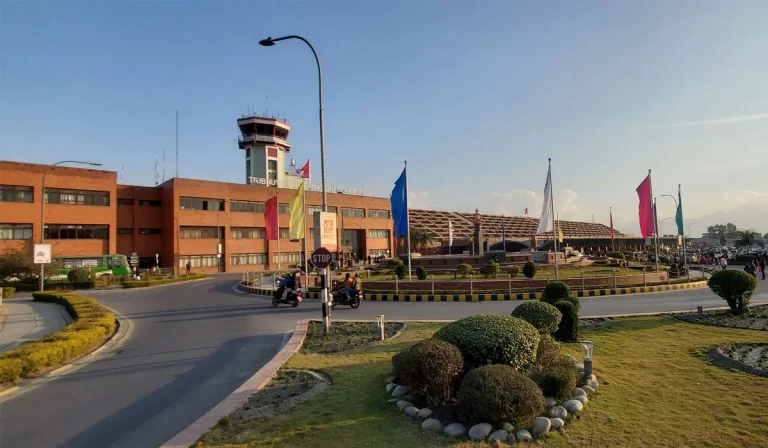
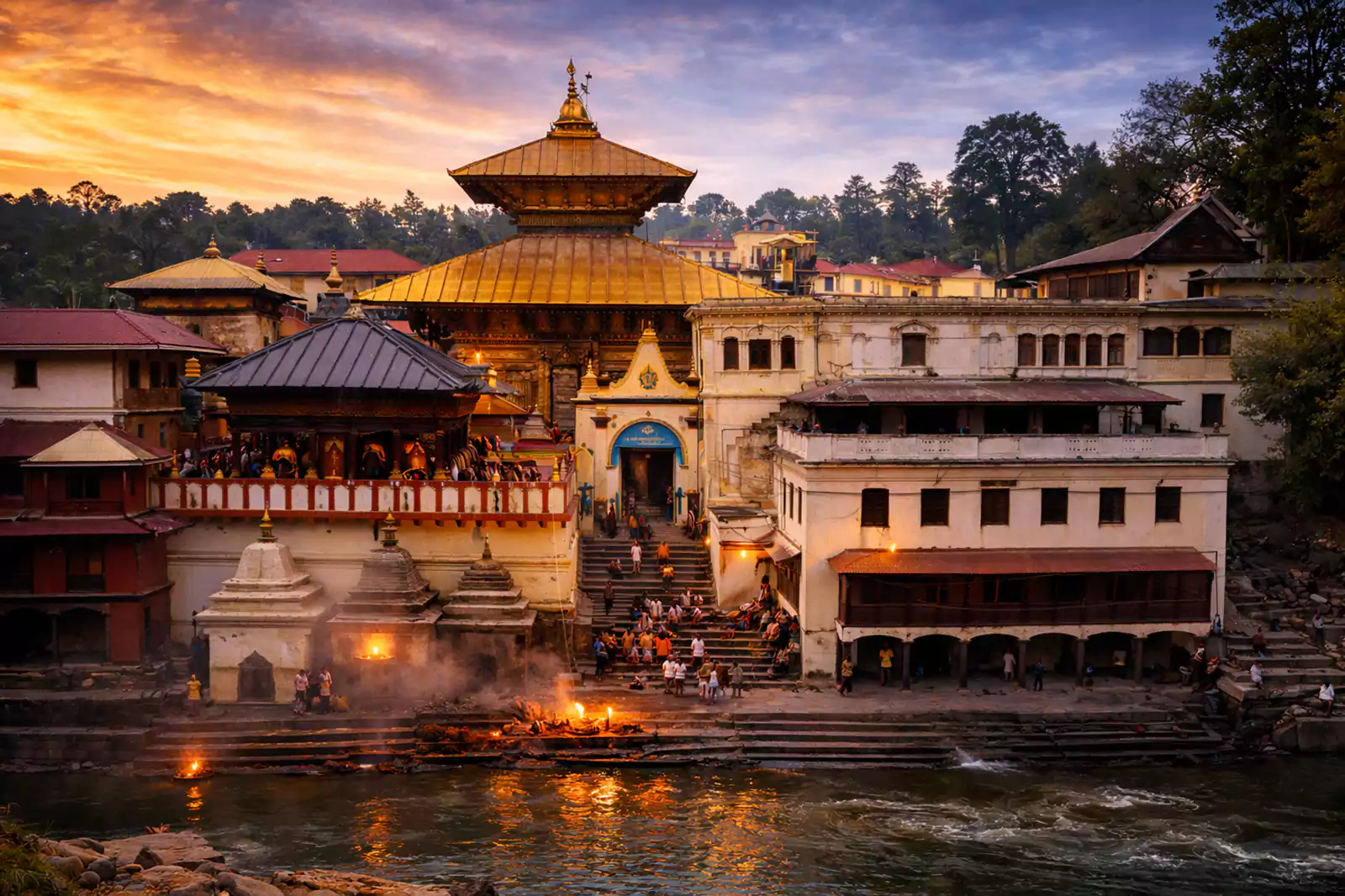
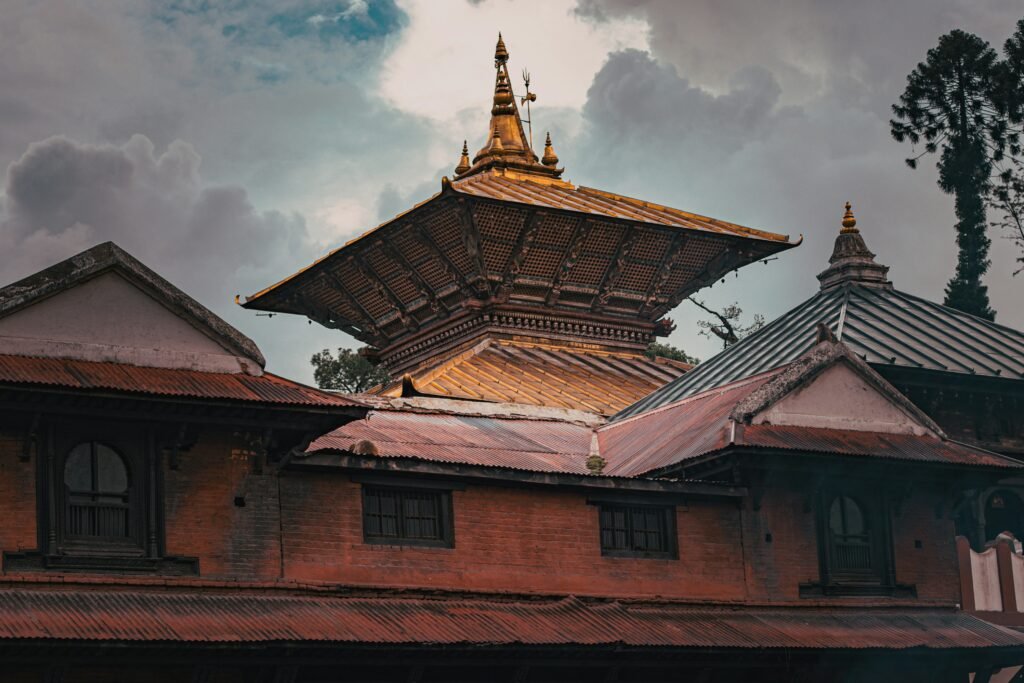
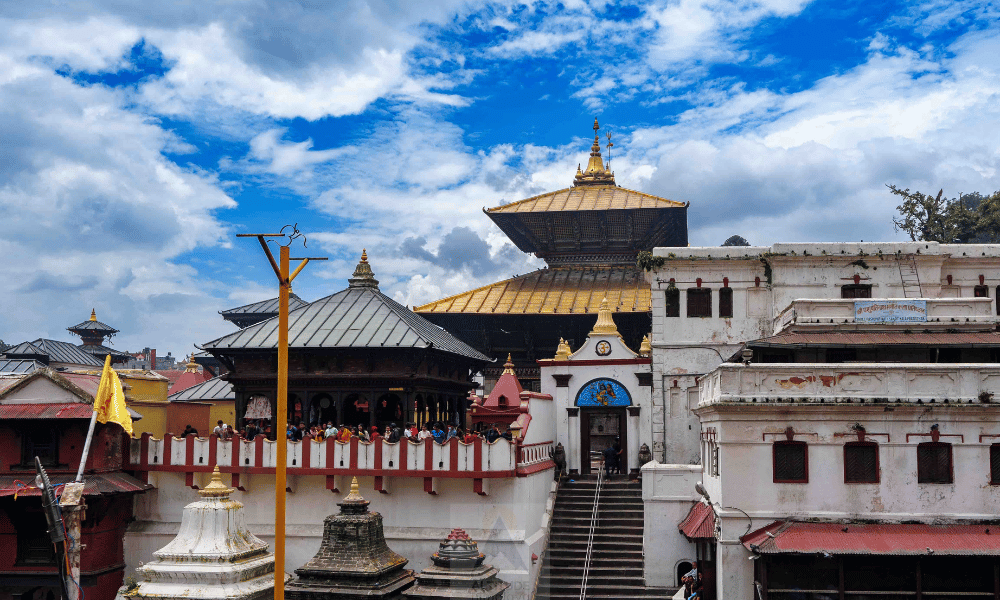
Pashupatinath is the holiest Hindu temple in Nepal. It is dedicated to Lord Shiva in his form as Pashupati, "lord of all living beings", and sits on the banks of the sacred Bagmati River in eastern Kathmandu, close to Tribhuvan International Airport. Most of the architecture dates to the 17th century, though parts are older, and the complex has been a UNESCO World Heritage Site since 1979 as part of the Kathmandu Valley listing.
The site is a living place of worship, not a museum. Pilgrims from Nepal and India arrive daily, sadhus gather at festival times, and the ghats along the river are used for Hindu cremations. Knowing this helps you plan: your visit will be more meaningful, and more respectful, if you treat it as a working temple.
Pashupatinath Temple timings at a glance
Use this table as a planning guide. Published sources differ slightly, and the Pashupati Area Development Trust (PADT) can change timings for festivals, security or weather.
|
What |
Timing |
Notes |
|
Temple opens |
4:00 AM daily |
Listed by PADT, the official trust. |
|
Complex open until |
9:00 PM daily |
PADT's stated closing time for the complex. |
|
Midday break (inner gates) |
Around 2:00 PM, variable |
One 2026 visitor guide says inner gates close at 2:00 PM; other sources report an earlier midday closure. Treat the break as variable. |
|
Evening aarti |
6:00 PM (winter), 7:00 PM (other seasons) |
PADT's homepage showed 6:30 PM to 7:30 PM on a June 2026 date, so arrive early. |
|
Special puja |
Roughly 8:30 AM to 12:00 PM on busy days |
Reported for the second Monday of Shrawan 2026; confirm for your date. |
|
Non-Hindu access |
Ghats, gardens, shrines, east bank |
The main sanctum is for Hindus only. |
What are the Pashupatinath Temple opening hours?
The temple opens at 4:00 AM every day, and PADT lists 9:00 PM as the daily closing time for the complex. In practice, the inner gates are not open all day. A mid-day break is common, and sources disagree on exactly when it starts and ends.
The practical advice is simple. Plan your main temple visit for the early morning or the evening, and treat the hours between late morning and late afternoon as the least reliable window. If you must visit at midday, you can still walk the ghats, the gardens and the east bank, which stay accessible.
Does the timing change with the season?
Yes. The evening aarti is the clearest example: a 2026 visitor guide places it at about 6:00 PM in winter and 7:00 PM in the rest of the year, following sunset. Sunrise and sunset also change how the day feels, so use the season to decide when to go.
|
Season |
What to expect |
Visit tip |
|
Winter (Dec to Feb) |
Cold mornings, earlier sunset, aarti around 6:00 PM |
Go for the evening aarti and carry a warm layer. |
|
Spring (Mar to Apr) |
Clear skies and mild temperatures |
Good all-day season. Shivaratri crowds fall in late winter. |
|
Monsoon (Jun to Sep) |
Rain, wet steps, heavy Monday crowds in Shrawan |
Carry an umbrella and wear non-slip shoes. |
|
Autumn (Oct to Nov) |
Dry, clear and comfortable |
The best season for photos of the ghats and the forest hill. |
What time is the evening aarti at Pashupatinath?
The evening aarti begins at about 6:00 PM in winter and 7:00 PM during the rest of the year, according to a 2026 visitor guide. PADT's own homepage listed the evening aarti from 6:30 PM to 7:30 PM in June. The safest approach is to reach the Bagmati riverbank at least 45 minutes early.
Visitors of all backgrounds can watch the aarti from the eastern bank of the Bagmati River, using the designated viewing space. Allow extra time for security checks, the walk down to the ghats and finding a spot. The view across the river, with lamps, bells and chanting, is one of the most memorable experiences in Kathmandu.
Some tour operators sell guided aarti tours, usually starting around 5:00 to 6:00 PM. They are convenient, but you do not need one: the aarti is open to watch from the east bank without a guide.
Is Pashupatinath open on festival days?
Yes, and these are the days when timings change most. Doors usually open earlier and stay open longer to handle the crowds. If you are flexible, avoid these dates for a calm visit. If you want the atmosphere, go early and expect to queue.
|
Festival |
What changes |
Planning note |
|
Shrawan Mondays (July to August) |
On the second Monday of Shrawan 2026 the four doors opened at 3:00 AM and stayed open until the 8:00 PM aarti, with special puja from 8:30 AM to 12:00 PM. |
Expect four queues and very large crowds. |
|
Maha Shivaratri |
The busiest day of the year, with sadhus arriving from across Nepal and India, and long overnight devotion. |
Expected around 6 March 2027; Nepal's observance can differ by a day, so confirm locally. |
|
Teej (August to September) |
Large crowds of women devotees in red, with singing and dancing. |
PADT has announced photography enforcement during Teej in the past. |
|
Bala Chaturdashi (Nov to Dec) |
Devotees scatter seeds and light lamps for departed relatives. |
Check PADT announcements a few days ahead. |
Can non-Hindus enter Pashupatinath Temple?
Non-Hindus cannot enter the main sanctum, which PADT restricts to Hindus. They are welcome in the wider complex, including the ghats, gardens and surrounding shrines, and can watch the evening aarti from the eastern bank. Even without entering the main temple, you can see its golden roof and the riverside rituals from the east bank.
PADT's visitor pages do not publish a detailed identity test. If you are unsure about eligibility, ask temple staff at the gate rather than assuming that nationality, appearance or fee category decides access.
What is the Pashupatinath entry fee?
Foreign nationals, Chinese visitors and non-Indian SAARC nationals pay NPR 1,000 per day per entry, according to the Nepal Tourism Board figure cited in a 2026 visitor guide. Indian and Nepali visitors enter free. Official rates can change, so verify the fee before arriving, and carry Nepali rupees for the ticket counter.
The fee category does not change the access rule. Paying the ticket gets you into the complex, not into the main sanctum.
What is the best time of day to visit?
- Early morning (4:00 to 7:00 AM): Cooler, quieter and the most devotional atmosphere. This is the best slot for the temple itself.
- Late afternoon into evening: Best for the ghats, the golden-hour light and the Bagmati aarti.
- Midday: Hottest and most likely to fall in the gate-closure window, so it is the weakest slot.
If you only have one slot, choose the evening: you can walk the complex in daylight and stay for the aarti.
How long does a visit take?
Plan for two to three hours if you want to walk the ghats, see the outside of the main temple and stay for the aarti. Add an hour if you plan a puja, want to climb to the Mrigasthali forest or visit Guhyeshwari. Festival days can double these times because of queues and security.
Dress code and etiquette
- Remove shoes where requested and expect to walk barefoot or in socks in some areas.
- Keep your voice low and do not point your feet toward shrines or people at prayer.
- Do not touch or feed the monkeys, and keep food, sunglasses and phones secured. They are bold.
- Do not climb on the ghats or step on ritual offerings.
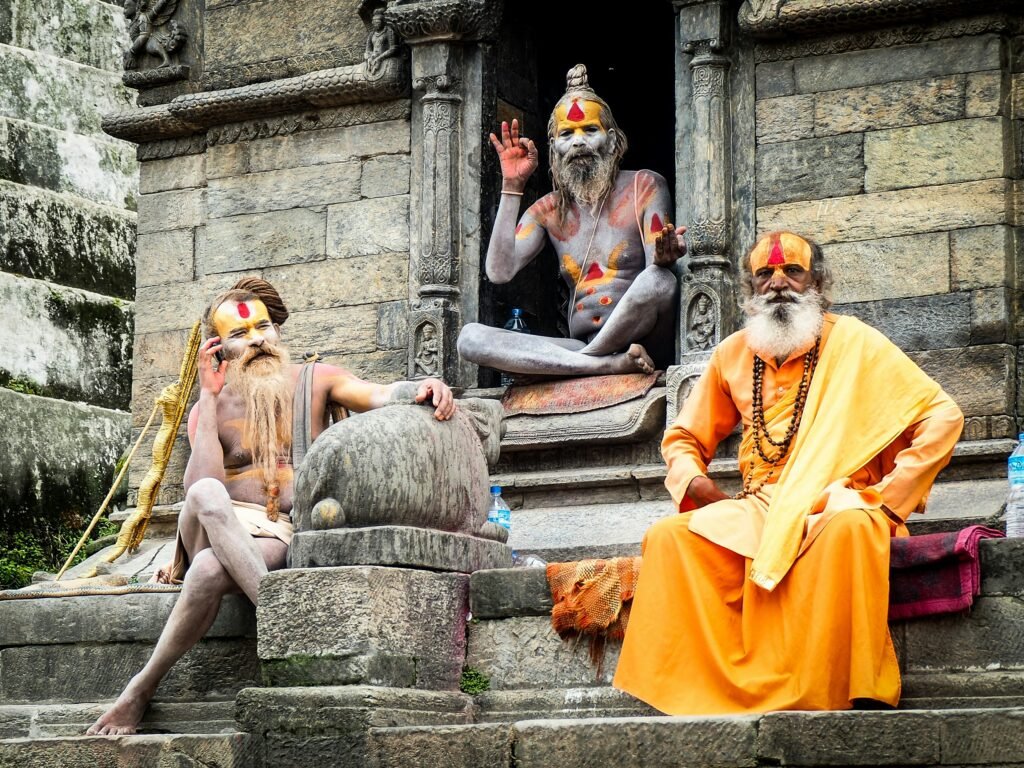
- Ask before photographing any person, priest or sadhu. Many sadhus expect a donation for photos.
Photography rules and funeral etiquette
-
Photography is not allowed inside the main temple, and no one may photograph the sanctum or the deity. Large cameras are generally kept out of the main gate, though mobile phones have been allowed in the past because of their size. PADT has fined visitors for photographing restricted areas, so if you are unsure, put the phone away or ask staff.
The ghats along the Bagmati are used for Hindu cremations, and many of the people you see are grieving. Travel guides say photography of the outer areas is generally tolerated, but you should never photograph cremations up close, and the east bank is the better and more respectful place to view the riverside from. When in doubt, do not take the picture.
How do I get to Pashupatinath from Kathmandu?
By public bus, routes 11, 22 and 30 stop at Gaushala, a five-minute walk from the temple entrance, according to PADT. From Thamel, Patan or the airport, a taxi or ride-hailing service is faster and usually takes 15 to 40 minutes depending on traffic.
Boudhanath Stupa is about a half-hour walk away, so the two sites pair well on one day. Many visitors do Pashupatinath in the late afternoon and Boudhanath at sunset, or the reverse.
How do I book a puja at Pashupatinath?
-
PADT directs puja bookings and religious services to its Puja Booking Office rather than the general office, so ask for the booking counter at the temple or check the official site for current options. Prices and available services vary, and special pujas are usually held in the morning on busy days. Be wary of unofficial priests who approach you on the street, and agree on what is included before paying.
Nearby places to add to your visit
-
- Guhyeshwari Temple, a major Shakti shrine close to the complex
- Gaurighat and the Bagmati ghats
- Mrigasthali forest, on the hill across the river, with many small stone temples
- Boudhanath Stupa, a short ride or about a half-hour walk away
- Tribhuvan International Airport, close enough that Pashupatinath works well as a first or last stop
A simple 2-3 hour itinerary
- Arrive 30 to 45 minutes before your target time and buy your ticket if required.
- Walk the west bank to see the main temple exterior and the ghats.
- Cross to the east bank for the view of the temple and the forest slopes.
- Climb a little way up the hill if you have energy, to see the small shrines.
- Settle into a viewing spot early for the evening aarti.
- Finish at Guhyeshwari or Boudhanath if you have time left.
What to carry
-
- Nepali rupees in small notes for the ticket and donations
- Modest clothing, a scarf and easy shoes
- A bottle of water and a hat for daytime visits
- A light jacket for winter evenings
- An ID, in case staff ask about nationality or fee category
Is Pashupatinath open every day?
Do I need a ticket to see the evening aarti?
Can I enter the main temple if I am Hindu?
Can I take photos at Pashupatinath?
Is Pashupatinath safe for tourists?
Can I walk from Boudhanath to Pashupatinath?
Is the site accessible for older visitors or wheelchair users?
What is the best time of year to visit?
Do I need a guide?
Should I verify timings before I travel?
Sources
Timings, fees and rules are drawn from the following. Where sources conflict, this guide says so.